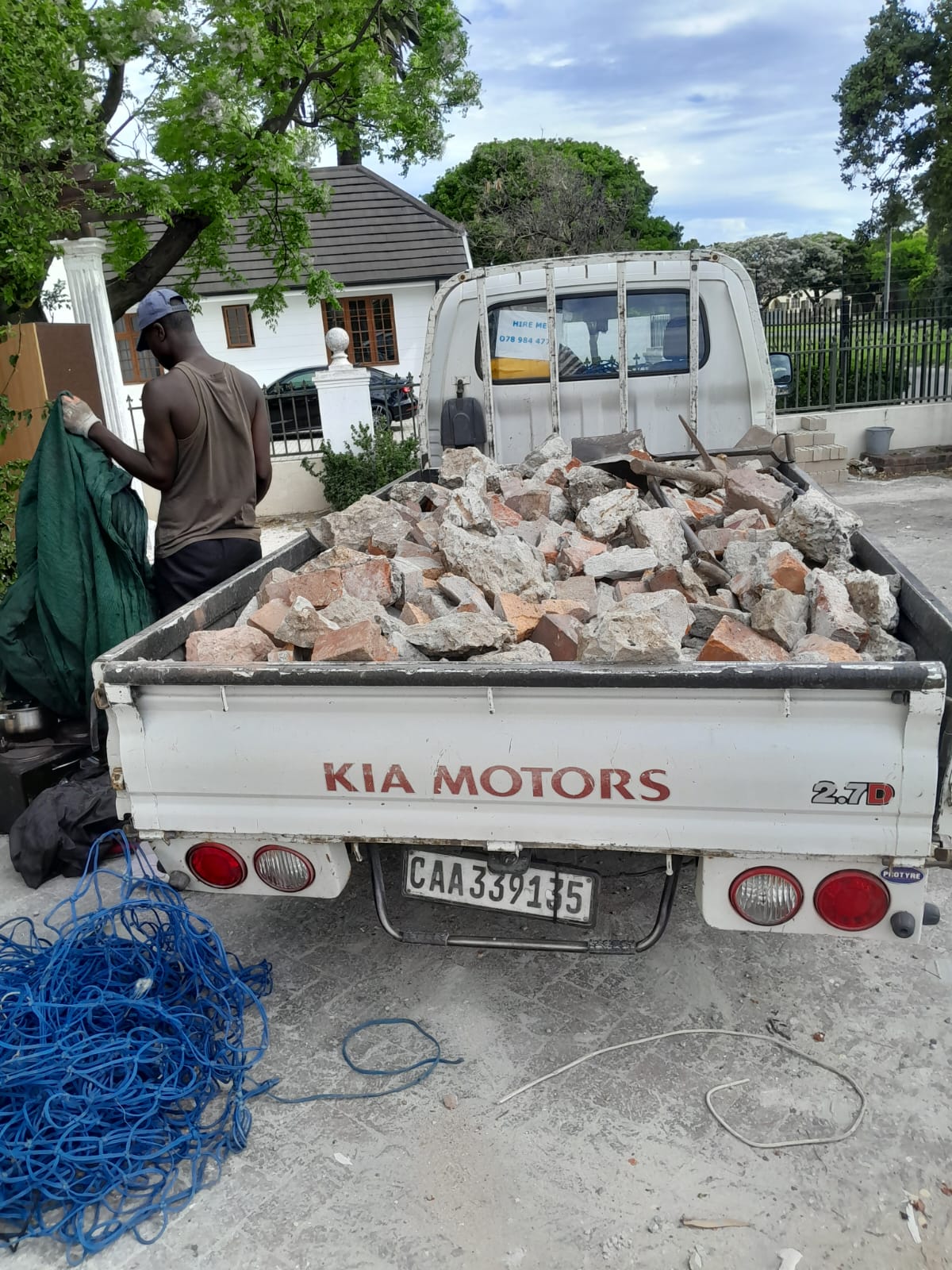
Halfway through a renovation, most people end up with one pile out back and no idea what to do with it. Broken tiles next to a busted microwave next to a bag of grass clippings: it all looks like “rubble” until someone has to move it. It isn’t.
Builders’ rubble, general household junk, garden refuse, and hazardous waste are collected differently, dumped at different sites, and in some cases handled under different laws. Get the sorting wrong, and you’re either paying more than you need to, or handing a crew a load they legally can’t take. Here’s how to tell the piles apart.
What Actually Counts as Builders’ Rubble
Builders’ rubble is the solid, inert material left over from building, renovating, or demolishing a structure: brick, concrete, tile, stone, plaster, sand, and plasterboard. If it came out of a wall, a floor, or a foundation, it’s rubble.
A skip full of broken bricks from a knocked-down garden wall is rubble. So is the rubble left after re-tiling a bathroom or replastering a ceiling. It’s heavy, it’s inert, and it’s dumped by weight, which is exactly why mixing it with lighter household junk usually costs more, not less.
What Doesn’t Count, and Where It Actually Goes
This is where most homeowners get caught out. A few things get thrown on the rubble pile out of habit, but none of them can legally travel with it:
- Garden refuse — leaves, branches, grass cuttings, old plants goes to a chipper, not a landfill. It’s organic, not inert, and it’s handled as its own stream.
- E-waste — old TVs, computers, fridges, geysers, microwaves has to go through a registered take-back scheme under South Africa’s Extended Producer Responsibility regulations, in force since May 2021. General landfills refuse it outright at the gate.
- Asbestos — sheeting, old pipe lagging, and some vinyl floor tiles is the strictest of the lot. Under South Africa’s Asbestos Abatement Regulations of 2020, only a registered contractor can remove it, and it has to go to a permitted hazardous-waste facility. A general rubble or junk crew is not legally allowed to take it, full stop — which is why we don’t offer asbestos removal as a casual add-on to a rubble job.
- Paint, solvents, motor oil, batteries, gas cylinders — all hazardous household waste, all with their own disposal route, none of it rubble.
Builders’ Rubble vs. Construction Debris vs. “Junk”
These three get used interchangeably, but they’re not the same pile:
- Builders’ rubble is specifically the inert stuff: brick, concrete, tile, sand.
- Construction debris is the wider mess a build leaves behind, and includes non-inert material too: offcuts of timber, packaging, broken fittings, old cabinetry. Some of it is rubble, some of it isn’t.
- Junk is everything else — old furniture, appliances, general household clutter, that has nothing to do with the building work at all.
A single renovation often produces all three at once. That’s fine; a crew that knows what they’re looking at can sort it on the day. What doesn’t work is treating the whole pile as one thing and hoping it gets sorted out at the tip.
Why Sorting Actually Matters
Two reasons, both practical rather than theoretical. First, cost: rubble is billed differently to general waste, so a mixed load either gets charged at the higher rate across the board or has to be re-sorted before it can be dumped: extra handling, extra time, extra cost.
Second, legality: Cape Town treats illegal dumping seriously, with real fines and the possibility of vehicle impoundment. Mixing hazardous material into a general load and dumping it as one doesn’t just risk a fine for whoever’s name is on the job; it’s the kind of thing that gets a site flagged. We’ve covered exactly what counts as illegal dumping and how it’s enforced in a separate guide, worth a read if you want the full picture.
How We Sort It on Collection Day
You don’t need to pre-sort a renovation site into four labelled piles before we arrive; that’s the job. When our team gets to a property, the rubble gets separated from the junk, the garden waste, and anything hazardous, right there on-site. Rubble goes to the correct disposal route, e-waste gets routed to a registered handler, and if there’s asbestos in the mix, we’ll tell you honestly that it needs a specialist rather than take it and create a problem for you later.
It’s a straightforward part of a rubble removal service: you point out the pile, we work out what’s actually in it.
If you’re mid-renovation and staring at a pile that’s part brick, part broken cabinet, and part garden cuttings, you’re not doing anything wrong; that’s just what a real job site looks like.
The sorting is the part worth getting right, and it’s the part we handle. When the pile’s ready to go, get it collected instead of trying to work out the tip’s rules yourself.
2 thoughts on “What Counts as Builders’ Rubble? A Cape Town Sorting Guide”