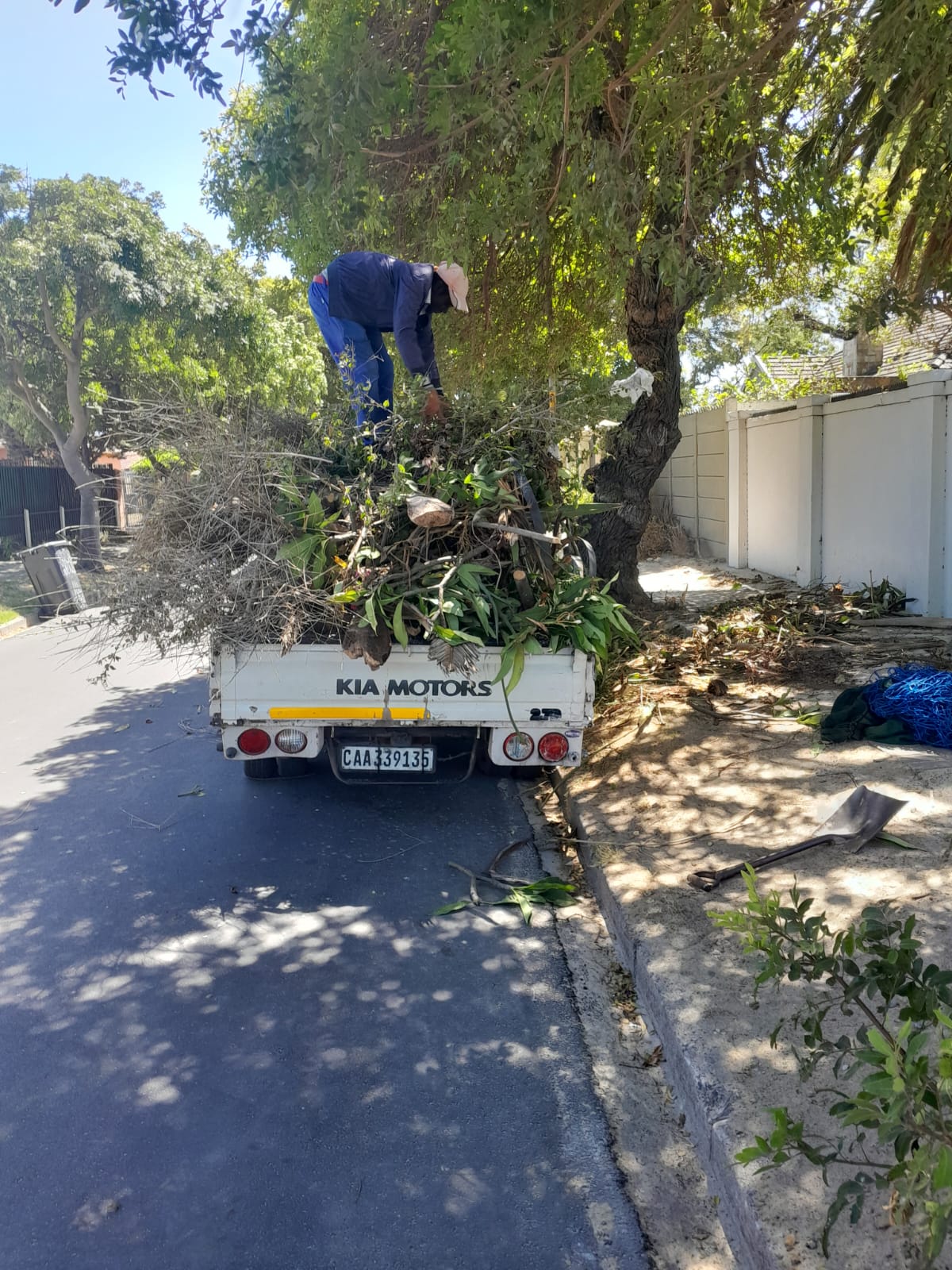
“Garden refuse” sounds obvious until you’re standing over an actual pile trying to work out whether that pruned branch, that bag of leftover potting soil, or that half-dead shrub actually qualifies. Guess wrong and you either end up with an overflowing bin or a wasted trip to a facility that turns you away at the gate.
Here’s the straightforward version: what counts as garden refuse in Cape Town, what gets rejected no matter which disposal route you use, and what changes the moment your pile has other waste mixed into it.
What Actually Counts as Garden Refuse
Garden refuse is green, organic, plant-based material generated from maintaining a garden, nothing more exotic than that. In practice, it covers:
- Grass clippings and lawn cuttings
- Leaves, whether raked or fallen
- Hedge trimmings and small prunings
- Branches and twigs from routine tree work
- Weeds and soft plant material pulled from beds
- Dead flowers, spent annuals, and general plant debris
If it grew in the garden and you removed it as part of normal upkeep, it almost certainly counts, and it’s also what’s allowed in your standard bin collection, provided it fits inside with the lid closed.
What’s Excluded From Every Free Option
A few categories get confused with garden refuse because they physically come from the garden, but the free and DIY routes, bin day, drop-off sites, and self-haul won’t take any of them:
- Soil, sand, and rubble in bulk — even if you dug it up doing garden work, this falls under builder’s or general waste, not garden refuse.
- Tree stumps and root balls — no free or DIY option takes these, regardless of size. This is exactly where a paid removal service earns its keep, since we can take stumps and root balls that the free options won’t.
- Grass sods — turf with the soil still attached is a different category from loose grass clippings.
- Chemicals, pesticides, and treated timber — hazardous by definition, need a specialist handler.
- Pet waste and other animal by-products.
- Food and kitchen organic waste — organic, yes, but a separate stream from garden refuse.
If you’re planning to self-haul to a municipal drop-off site rather than book a collection, the City applies its own additional size and sorting rules on top of this. See our full guide to Cape Town’s garden waste drop-off rules covers those in detail.
Mixed Garden + Rubble Loads: What Happens
Post-renovation gardens are the classic case: broken tiles, offcuts of timber, bags of old cement, and garden waste all end up in the same pile because they were generated at the same time. Every disposal route treats this as two separate categories that need to be sorted apart, not one combined load.
Take a mixed load to a municipal facility, and it gets turned away and redirected to landfill at extra cost, no sorting on-site, no exceptions. A professional crew can do what the free options can’t: separate the streams on the spot and take the whole pile in one visit, rather than sending you home to sort it yourself first.
Quick Self-Check Before You Book
Before you decide how to get rid of a pile, run through this:
- Is it plant material — not soil, rubble, or chemicals? That’s garden refuse.
- Is it a stump, root ball, or turf? Free options won’t touch it; you’ll need someone equipped to handle it.
- Is it tangled up with builder’s rubble or other waste? It needs sorting either way — the only question is who does the sorting.
- Thicker than a broom handle, or heavier than one person can lift? Worth thinking past a DIY trip.
- Not sure? Send a photo rather than guess — it’s faster than a wasted trip.
If your pile includes anything on the excluded list, or it’s mixed with rubble, we take all of it in one load — no separate trips, no sorting it yourself first.
 Chat with us