The Direct Answer
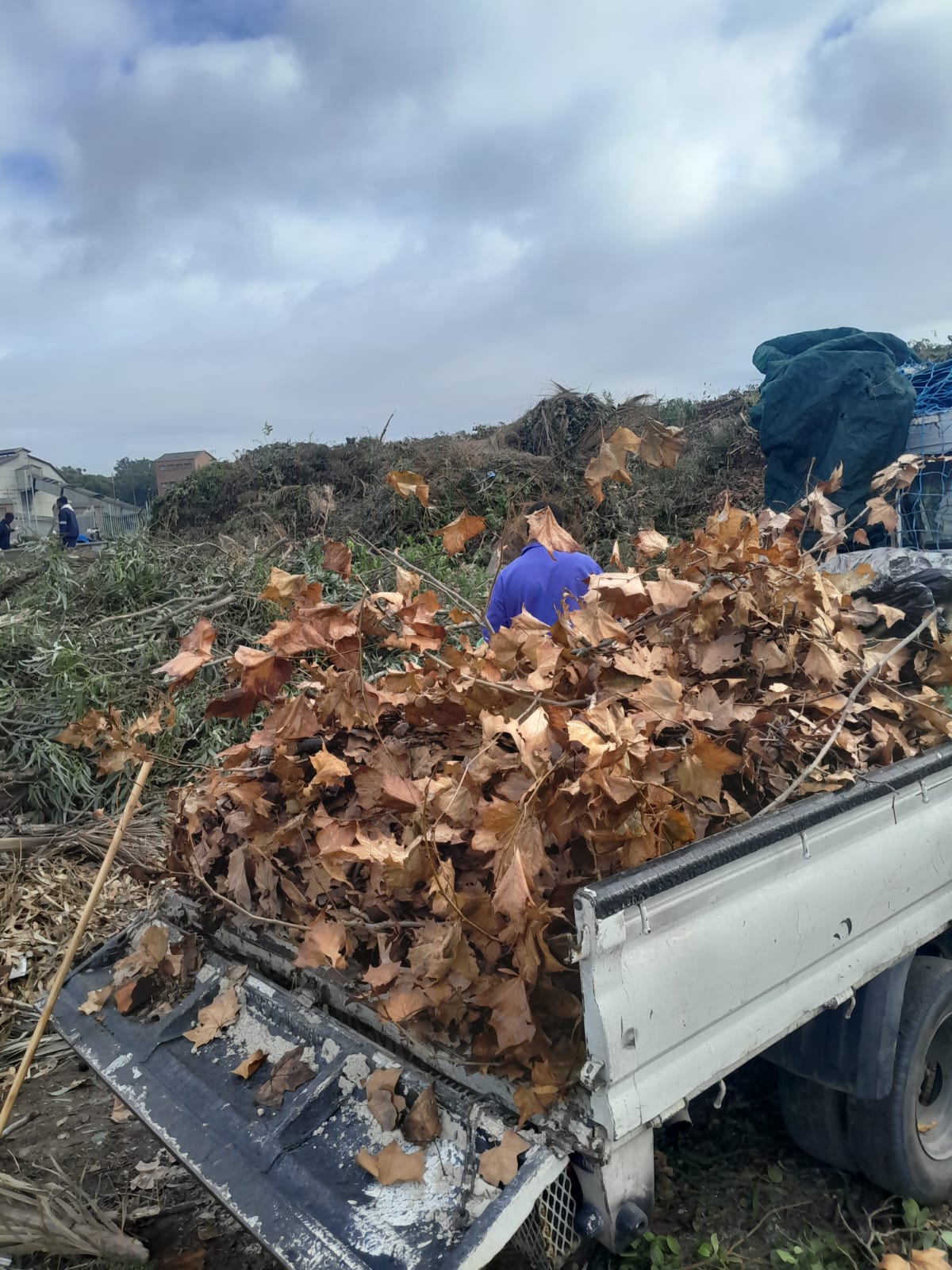
Yes, garden waste can be taken to the majority of Cape Town’s municipal drop-off facilities, and for most residents, it is completely free of charge. The City of Cape Town operates a network of drop-off sites across the metro that accept clean garden refuse, chip it on-site, and process it into compost. However, the word “clean” is doing a lot of work in that sentence. There are specific rules about what garden waste is accepted, which facilities accept it, load limits, vehicle restrictions, and, critically, a different set of rules for garden services companies versus private residents.
Get any of these details wrong, and your load may be turned away at the gate.
This guide sets out exactly what you need to know before you load up the bakkie.
What Counts as “Clean Garden Waste”?
The City of Cape Town’s official drop-off conditions define clean garden waste as:
- Grass cuttings
- Leaves
- Branches — up to a maximum of 1.2 metres long and 300 mm in diameter
- Biodegradable plant material from residential and business properties
That’s the complete list. Clean means exactly that: uncontaminated, separated, and containing nothing that shouldn’t be there.
The following are explicitly excluded from the definition of clean garden waste, and will result in your load being turned away if found:
- Paper, plastics, or packaging
- Wood offcuts or treated timber
- Glass or metal
- Ceramics or tiles
- Ceiling board or building materials
- Anything hazardous in nature
- Products of animal origin (including pet waste, bones, or carcasses)
- Grass sods (the root-and-soil sections of turf)
- Tree stumps with roots attached
If you’ve bagged your garden refuse in black bags, you’ll need to empty those bags at the facility as directed by site staff. Sealed bags of any kind are not accepted as-is, because they cannot be visually inspected for contamination.
Which Cape Town Drop-Off Sites Accept Garden Waste?
Based on the City of Cape Town’s official drop-off schedule (February 2024), the following facilities accept clean garden waste. This is the most comprehensive and current list publicly available.
Sites Accepting Clean Garden Waste
| Facility | Address | Area |
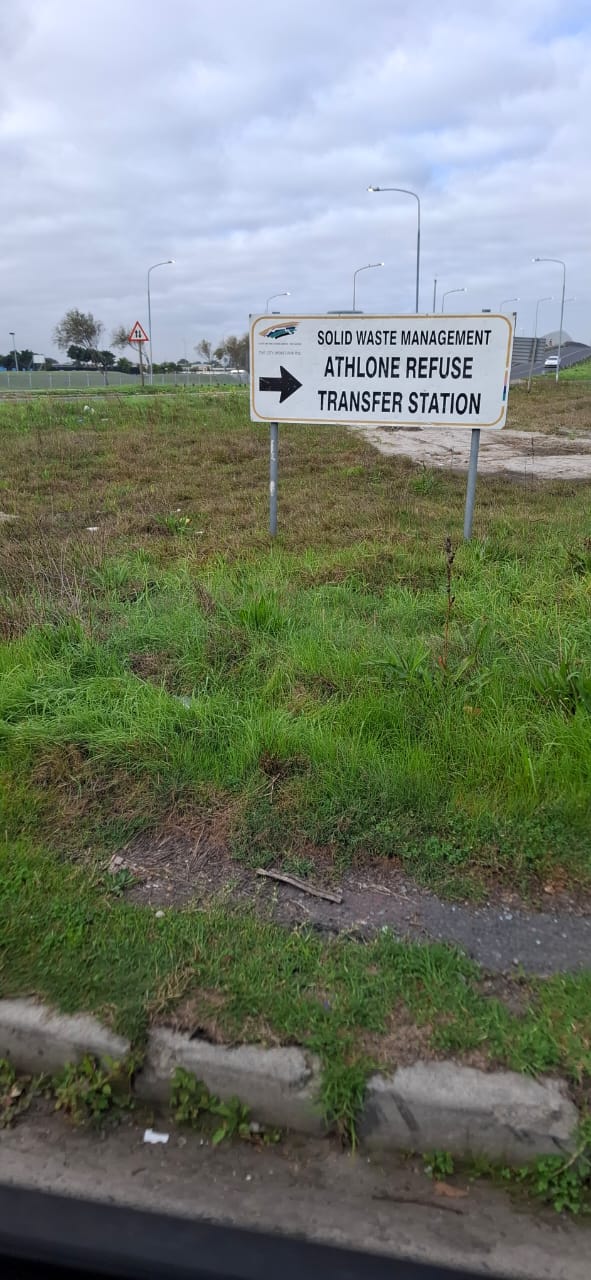
| Athlone Refuse Transfer Station | Settlers Way, Athlone | Southern Suburbs |
| Belhar | Adam Tas Avenue, Belhar | Bellville / Durbanville |
| Bellville Refuse Transfer Station | Sacks Circle, Bellville | Bellville |
| Coastal Park Landfill Site | Baden Powell Drive, Muizenberg | False Bay |
| Faure | Old Faure Road, Eerste River | Somerset West |
| Gordon’s Bay | Sir Lowry’s Pass Road | Gordon’s Bay |
| Hout Bay | Main Road, near Mandela Road | Hout Bay |
| Induland | Induland Avenue, Hanover Park | Cape Flats |
| Killarney | Potsdam Road, Killarney | Milnerton / West Coast |
| Kommetjie | Kommetjie Road | Far South |
| Kraaifontein IWMF | Cnr Maroela and Sandringham Roads | Kraaifontein |
| Mitchells Plain | Spine Road | Cape Flats |
| Prince George Drive | Prince George Drive | Retreat |
| Ravensmead | Industrial Ring Road | Ravensmead |
| Retreat | Tenth Avenue, Retreat | Retreat |
| Schaapkraal | Old Schaapkraal Road | Ottery / Philippi |
| Simon’s Town | Blue Waters Close | Simon’s Town |
| Swartklip | Swartklip Road, Mitchells Plain | Cape Flats |
| Tygerdal | Orange Street, Tygerdal | Tyger Valley |
| Vissershok Landfill Site | Frankdale Road, off N7, Table View | Blouberg / West Coast |
| Welgelegen | Akademie Street, Welgelegen | Paarl / Wellington |
| Woodstock | Beach Road, Woodstock | City Bowl |
| Wynberg | Rosmead Avenue, Wynberg | Southern Suburbs |
| Delft | Fabriek Street, Delft | Cape Flats |
That is 24 facilities across the metro, a wide-reaching network that puts at least one drop-off site within reach of virtually every suburb in Cape Town.
One Important Exception: Sea Point
The Sea Point drop-off facility on Tramway Road is exclusively for recycling activities: paper, cardboard, glass, plastic, and so on. It does not accept garden waste, builder’s rubble, or bulky waste of any kind. If you live on the Atlantic Seaboard, your nearest garden waste drop-off point is in Woodstock or Hout Bay.
Operating Hours
Drop-off sites operate across two seasonal schedules:
Summer (1 September – 30 April):
- Monday to Friday: 08:00 – between 18:00 and 20:30 (varies by site)
- Saturdays and public holidays: 08:00 – 17:00
- Sundays: 09:00 – 13:00 or 17:00 (varies by site)
Winter (1 May – 31 August):
- Monday to Friday: 08:00 – 17:00 to 17:45 (varies by site)
- Saturdays and public holidays: 08:00 – 17:00
- Sundays: 09:00 – 13:00 or 17:00 (varies by site)
Closed: Good Friday, Christmas Day, and New Year’s Day at all facilities. Vissershok Landfill is also closed on Sundays.
The best practice is to confirm your specific site’s hours before travelling, as operational capacity can affect access on any given day. Call the City’s Solid Waste call centre on 086 010 3089 or email Wastewise.User@capetown.gov.za for the most current information.
The Rules: Loads, Vehicle Size, and Sorting
The City applies a clear and consistently enforced set of conditions at all drop-off facilities. Arriving without knowing these risks could have your load refused.
Vehicle carrying capacity
Your vehicle, including any attached trailer, must have a carrying capacity of 1.5 tonnes or less. Standard bakkies, hatchbacks, sedans with trailers, and light delivery vehicles typically fall within this limit. Larger commercial trucks are not permitted to use the free drop-off network.
Maximum loads per day
A maximum of three loads per vehicle per day applies. This includes visits by garden services companies.
Sorting is mandatory
All waste must be separated and sorted before you arrive. A mixed load of garden waste combined with builder’s rubble, general household waste, or any other material will be refused access and directed to a landfill instead. The additional cost of landfill disposal will apply to refused loads.
It’s free
For vehicles within the 1.5-tonne limit bringing clean, sorted garden waste, disposal is free of charge. Larger volumes of garden refuse can be disposed of at Council disposal facilities at approved tariffs; contact the City for current pricing.
Bags must be emptied
If you’ve collected garden waste in black refuse bags, bring them open and be prepared to empty them on arrival as directed by site staff. This is standard procedure to verify the load is not contaminated.
Special Rules for Garden Services Companies
If you operate a garden services or landscaping business, pay close attention here; the rules that apply to you are different from those that apply to private residents in one important respect.
The City of Cape Town explicitly prohibits garden services companies from using four specific drop-off facilities:
- De Grendel (Cnr 5th Avenue and Bertie Genade Street, Parow)
- Atlantis (Dassenberg Road, Atlantis)
- Kensington (Dapper Road, Kensington)
- Welgelegen (Akademie Street, Welgelegen)
These four sites are restricted to private residential use only for garden waste. Garden services companies arriving at these facilities with green waste will be turned away.
Beyond this restriction, the same rules apply: vehicles must not exceed 1.5 tonnes capacity, a maximum of three loads per day per vehicle applies, and all waste must be sorted before arriving.
For commercial volumes that exceed the free drop-off allowance, garden services companies should contact the City’s Urban Waste Management department to arrange disposal at approved tariff rates.
What Happens to Garden Waste Once It’s Dropped Off?
This is where Cape Town’s drop-off system genuinely earns its environmental credentials, and it’s something very few competing articles bother to explain.
Garden waste deposited at City drop-off facilities is not sent to landfill. Instead, it follows a closed-loop process:
Chipping
Green garden refuse branches, cuttings, and plant material are fed through industrial chippers on-site. The Kraaifontein Integrated Waste Management Facility has dedicated garden greens chipping operations, and several other sites also have on-site chipping capability. Branches brought in must conform to the 1.2 m length and 300 mm diameter maximum to work with the machinery.
Composting
Chipped material is composted. This diverts a significant volume of organic material away from already-strained landfill sites and converts it into a useful product.
Reuse
Finished compost is made available for use in municipal parks, road verges, and community green spaces, completing the waste-to-resource cycle.
This process is one of the reasons why the City is so strict about contamination. A single load of garden waste containing plastic, metal, or hazardous materials can contaminate an entire batch of compost and render it unsuitable for reuse.
What Garden Waste Is NOT Accepted
To be absolutely clear, here is a summary of garden-related materials that are refused across the drop-off network:
Not accepted anywhere in the network:
- Tree stumps with root balls attached
- Grass sods (soil-attached turf)
- Organic kitchen waste (food scraps, peels, leftovers) — even if mixed with garden cuttings
- Animal waste, bones, or products of animal origin
- Branches exceeding 1.2 m in length or 300 mm in diameter (without pre-cutting)
- Contaminated garden bags (sealed black bags not opened for inspection)
- Any load mixed with rubble, glass, metal, plastic, wood offcuts, or building materials
Not accepted at specific sites:
- Any garden waste at Sea Point (recycling only)
- Garden waste from garden services companies at De Grendel, Atlantis, Kensington, and Welgelegen
A note on large trees and stumps
Significant tree removal, mature trees, large root balls, and stumps are typically outside the scope of what the free drop-off network is designed to handle. For this type of removal, a professional garden waste removal service is the more practical and often necessary option.
Alternatives to the Drop-Off: Composting, Collection, and Private Removal
The municipal drop-off network is a valuable free resource, but it’s not always the right solution for every household or situation.
Home Composting
For regular garden maintenance, weekly grass cuttings, seasonal pruning, and leaf fall, composting at home is the most sustainable option and requires no transport at all. The City of Cape Town actively promotes home composting and guides its Greener Living programme. A compost bin converts kitchen-safe food waste and garden trimmings into soil conditioner within a few months.
Kerbside Collection
The City’s weekly refuse collection service collects bagged household waste from the kerb, but it is not designed for large volumes of garden refuse. However, the City does provide a bulk garden waste collection service in many areas. Check your area’s specific collection schedule. The City’s waste schedule tool at capetown.gov.za allows you to look up your collection day and service type by street address.
Professional Garden Waste Removal
For volumes that exceed drop-off limits, for properties without suitable vehicle access, for elderly or physically limited residents who cannot load and transport waste independently, or for large-scale jobs like hedge removal or garden clearing after a storm, a professional junk and garden waste removal company offers a practical alternative.
A garden waste removal service will:
- Collect directly from your property
- Do all loading and heavy lifting
- Transport green waste to a licensed disposal or composting facility
- Handle oversized material — palm fronds, tree branches, root balls — that the City’s drop-off may not accept
- Provide same-day or next-day service without the need for a vehicle of your own
For homeowners, body corporates, and property managers dealing with large-scale garden clearance, this is often the most time-efficient and cost-effective choice when set against the labour and multiple trips a self-transport solution requires. At Rapid Junk Removal, we offer affordable garden waste removal. Find out the cost of hiring garden waste removal services in Cape Town.
You can also read this guide on how to get rid of garden waste.
Frequently Asked Questions
Is it free to drop off garden waste at Cape Town municipal sites?
Yes, for residents using vehicles with a carrying capacity of 1.5 tonnes or less, clean garden waste can be dropped off at no charge, up to three loads per vehicle per day. Larger volumes at Council disposal facilities attract tariff-based fees.
Can I drop off garden waste in black plastic bags?
You can bring waste in bags, but you must be prepared to empty them at the facility as directed by site staff. Sealed, uninspected bags are not accepted because contamination cannot be verified. Do not expect to drop off closed bags and leave.
How long can I drop off garden waste? What are the hours?
Hours vary by site and season. In summer (September–April), most sites are open until 18:00–20:30 on weekdays and 17:00 on Saturdays. In winter (May–August), most sites close earlier at 17:00–17:45 on weekdays. All sites are open on Sundays (09:00–13:00 or 17:00 depending on the site). All sites are closed on Christmas Day, Good Friday, and New Year’s Day.
Can I take palm tree fronds and large branches to the drop-off?
Branches are accepted if they are a maximum of 1.2 m long and 300 mm in diameter. Very large branches will need to be cut down before arrival. Palm fronds that fall within these dimensions are accepted; large palm trunks and stumps are not.
Can I drop off garden waste if I’m a garden services company?
Yes, at most sites. Garden services companies may not use De Grendel, Atlantis, Kensington, or Welgelegen. All other sites are available. The same three-loads-per-vehicle-per-day and 1.5-tonne vehicle limit apply.
What happens if my load contains mixed waste garden refuse and rubble?
Your load will be refused access to the drop-off facility and redirected to the nearest landfill site. Landfill disposal attracts additional charges. Always sort your waste before arriving. Garden waste must be kept entirely separate from rubble, general household waste, and recyclables.
Can I drop off grass sods and tree stumps?
No. Grass sods and tree stumps with roots attached are specifically excluded from the list of accepted clean garden waste. If you have large root balls or heavy stumps to remove, contact a professional garden waste removal company who can arrange proper disposal.
Summary
Cape Town’s municipal drop-off network is one of the most accessible free garden waste disposal systems of any South African city. With 24 facilities spread across the metro, most residents are within a reasonable driving distance of a site that will accept their clean garden waste at no cost.
The system works well as long as you follow the rules. Waste must be clean, sorted, and uncontaminated. Vehicle capacity must not exceed 1.5 tonnes. Loads are capped at three per vehicle per day. Garden services companies are barred from four specific sites. And the Sea Point facility accepts recyclables only.
For everything within those parameters, the municipal drop-off is the most cost-effective garden waste disposal option in Cape Town. For volumes, materials, or situations that fall outside those parameters large tree removals, oversized stumps, storm damage, properties without vehicles a professional garden waste removal service remains the practical and most efficient solution.
 Chat with us